Q&A With Members of the Class of 2020
By Bret Kroeger, Director of Data and Strategic Analytics
One of the great joys of being a teacher is having the opportunity to root for an ever-growing list of people. We may spend only a semester or single school year with our students—teaching, supporting and connecting—and then spend our lifetimes tracking their progress and hoping for the best.
I have had the honor of teaching high school students for nearly two decades, and I am in awe of the amazing and varied paths my former students have taken: engineers, teachers, investment bankers, college professors, nurses, medical doctors, journalists, lawyers, entrepreneurs and professional athletes, to name just a few. And while it seems unlikely that the algebra extra help I provided years ago had much bearing on the success of a current NHL player, there is something in the bond forged between teacher and student that leads me to cheer for his team as if I were a member of his extended family.
As a parent trying to provide a foundation for the future success of my own two children (second and fourth graders at Tower Hill), more and more I find myself looking to the paths of my former students for guidance. Should my children be taking piano lessons? What about year-round youth sports? When is it safe for them to have cell phones? What is the ideal college fit for them? What are the secrets to success, and how can I create conditions for my children that will help them lead lives of meaning and purpose?
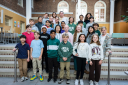
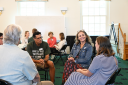
These were the questions swirling in my mind when I had the privilege and great joy of running into several former students and recent alums attending their five-year reunion at Tower Hill last fall. These young people were beyond what can feel like the end-all, be-all arms race of getting into the most highly ranked colleges. These folks had already graduated from college and are now in the next phase of their lives, making impressive and impactful contributions to a wide array of chosen fields.
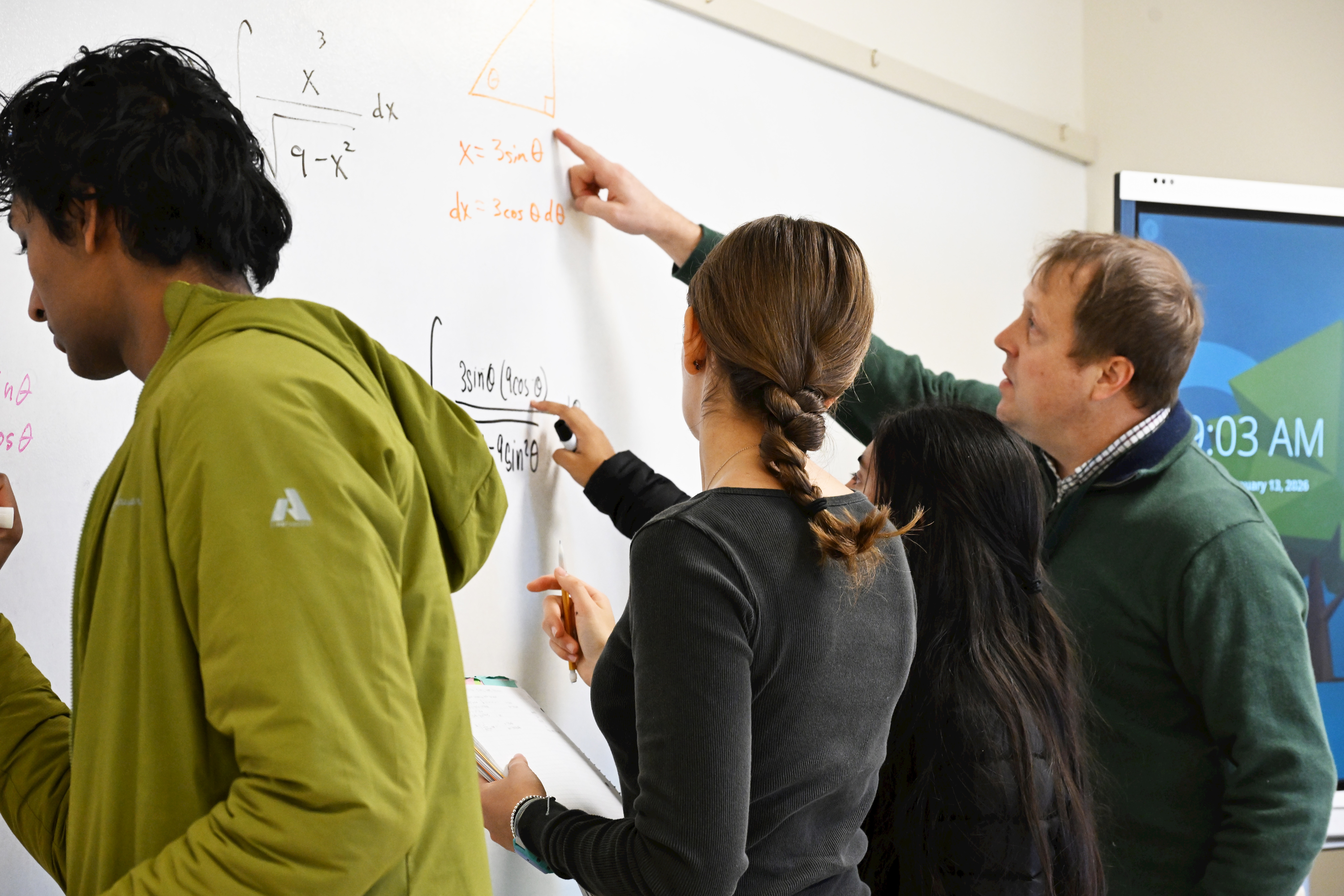
For example, in just one section of a calculus class of 15 seniors I taught during the 2019-2020 school year, there are five students enrolled in doctoral programs for medicine, law, physics and electrical engineering; five students working in investment banking or economic consulting; a few students engaged in software engineering and software development for quickly growing startups; and a couple students pursuing biomedical research. Incredible! I was reminded that so much talent and potential fill the classrooms at Tower Hill, and how fortunate we teachers are to work with such amazing students.
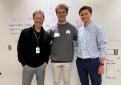
Inspired to learn more, I recently caught up with a few students from that class to discuss their paths since graduation. Excerpts from those conversations are shared below. [Responses have been lightly edited for clarity and concision.]
What have you been up to since graduating? What is your current professional focus?
Joe Zakielarz ’20: I rode the highs of Mr. Hoch’s physics class into a mechanical engineering degree. Then halfway in, I realized software was more fun. I did some software internships in Miami and San Francisco, studied abroad in Madrid, and after graduating, joined GPTZero, the world’s leading AI detector.
This past October, I joined a startup in San Francisco called Petra Security, which detects and stops attackers who get in when employees click phishing links in their inboxes. We’re a young, scrappy team of 10, and we’re growing very fast because it turns out that people just love clicking links in their emails. At our current growth rate, in a few years, we’ll be protecting multiple percentages of everyday working Americans who use email. I’m software engineer #2 and have to wear many hats and encounter ridiculous problems every day. I plan to start a company of my own in the next few years, and in the meantime, I’m getting good practice being an early employee.
Markus Wittreich ’20: I am currently a PhD student studying electrical engineering. I did my undergrad and received my Master’s this past summer, both in electrical engineering. I am currently focused in the power magnetics sector with a primary research emphasis on creating a novel class of electric motors that resolves many issues with the current industry standards without sacrificing performance.
Jess Chen ’20: I studied neuroscience and philosophy. I spent the summer after college traveling across Europe and Asia, and have now been at my economic consulting job for a year and a half! We often describe the job as “math for lawyers,” as we perform data analytics and assist various experts with their reports and depositions related to legal cases.
How would you describe the role Tower Hill has played in your journey so far?
JZ: Multa Bene Facta is special. Tower Hill taught me how to learn and approach a wide variety of problems. Engineering is solving one problem after another, and rarely are they the same issue. Quite often, you need to learn more than one thing to solve a problem. Developing different ways of thinking, competing and approaching problems is the point of school.
Tower Hill was the perfect springboard. It was a) possible and b) cool to do multiple things and do them well. That’s not normal for high school. Tower Hill prepares you for the academic workload of college. It teaches you to be collaborative. It teaches you to have school spirit and leverage your privilege for the betterment of the world.
MW: It has been the best foundation someone could ask for, especially the foundation it laid for my learning. Realistically, every new job or research role will require a highly specific set of tasks to be done. Those tasks will need to be freshly learned, and in so many jobs, they are less focused on what knowledge you have exactly coming into the job, but how well you can adapt and learn in the new role. I am confident that with the backing that Tower Hill has given us all, we are prepared well above the average candidate. That is the type of foundation that is invaluable and is quite unique to people with a Tower Hill education.
JC: The critical thinking, writing and speaking skills I learned at Tower Hill left an indelible mark on me. While I can’t say I’ve used the Chain Rule after your class, I use logical thinking every day when I have to code and solve complex problems at work. My English classes helped me tremendously when writing papers in college and assisting with report drafting at work. I can confidently say the hardest classes and tests I ever took were at Tower Hill.
Was there a specific class, teacher, program or experience at Tower Hill that had a lasting impact on you that has contributed to your growth after graduation?
MW: My general answer to any question like this is: I can rattle off multiple classes that helped me through college. Classes like Calc I with Mr. Smith, Calc II with you and probably most importantly, Physics C with Mr. Hoch, all helped to shape the student I am today. That said, it’s important to distinguish between the content itself and the broader impact of those classes. While the concepts were helpful to have been exposed to before coming to college, the actual overlap between that material and what I’ve studied in college is probably only 3-5%. The true impact of those courses (and honestly, most of the Tower Hill education) was learning how to learn and the drive to want to learn. All of those high-level classes used advanced concepts as a vehicle to teach how to tackle complex problems and find the enjoyment in discovering a solution.
JC: I couldn’t choose just one! Tower Hill taught me how to think and not what to think, and I will always be grateful to the teachers and staff who shaped me into who I am today. What is special about Tower Hill is the ability for students to truly connect and confide in mentors. I felt supported by Ms. Hubler far outside the realm of English class, and Mr. Keim, my advisor and band teacher, is one of the most influential people in my life. Outside of the life advice, he helped create my first half-marathon training plan, and I’ve gone on to even run a marathon.
What advice would you give to current students at Tower Hill?
MW: This will be a bit of a cliché piece of advice, but for students going into a STEM field, learn how to get comfortable with being uncomfortable. That means, be prepared to go into situations where you feel like you are tossed in the deep end and doing your best to survive. This dynamic shows up often in research groups. A professor will often expect you to figure it out, which means you need to think quickly and determine a solution that is both safe and efficient. And most of the time, professors are more than willing to help out, but they want you to think on your own, independently. It is not only to test your abilities, but also to see if you find a better solution to a problem. By the end of college and into grad school, students rely less on professors strictly for the answers. As much as you look to them for help, they are looking to you as a fresh mind to tackle a problem in a unique way. That is exactly what a PhD is: the pursuit of discovering something novel!
JZ: Do fun and challenging projects outside of school that stretch your mind, preferably with friends. Write a book together. Make songs together. Make games together. Mow lawns for money together. Build an app and use TikTok to market it together.
Become AI native, but beware: AI has changed software engineering more in the last two months than it has in the last two decades. Most of the code I “write” is generated by AI, and I’m genuinely 10 times more productive. People who don’t use it will be left behind. But, be very careful about stunting your academic growth—your critical thinking skills atrophy within months. Just because AI can do it better than you doesn’t mean you shouldn’t do it by yourself. You shouldn’t use it to write for you or do your problem sets. You should use it to make games, websites, teach you about stuff, generate study questions, etc.
Are you in contact with any of your classmates from Tower Hill? If so, in what ways do you stay connected to them?
MW: I am in contact with many Tower Hill classmates of mine. I can think of more than 10 people whom I talk to on a weekly basis. Most of the time, it is texting/calling as geographically we are all over. However, when we are all back in Delaware for holidays or other events, it is common that we will meet to catch up in person. That type of friendship is unique to a place like Tower Hill as many college friends I talk to have zero contact with high school friends. Tower Hill gives you a family of people that you will always be able to go back to.










.jpg&command_2=resize&height_2=85 "Drew Pratt '23")